Table of Contents
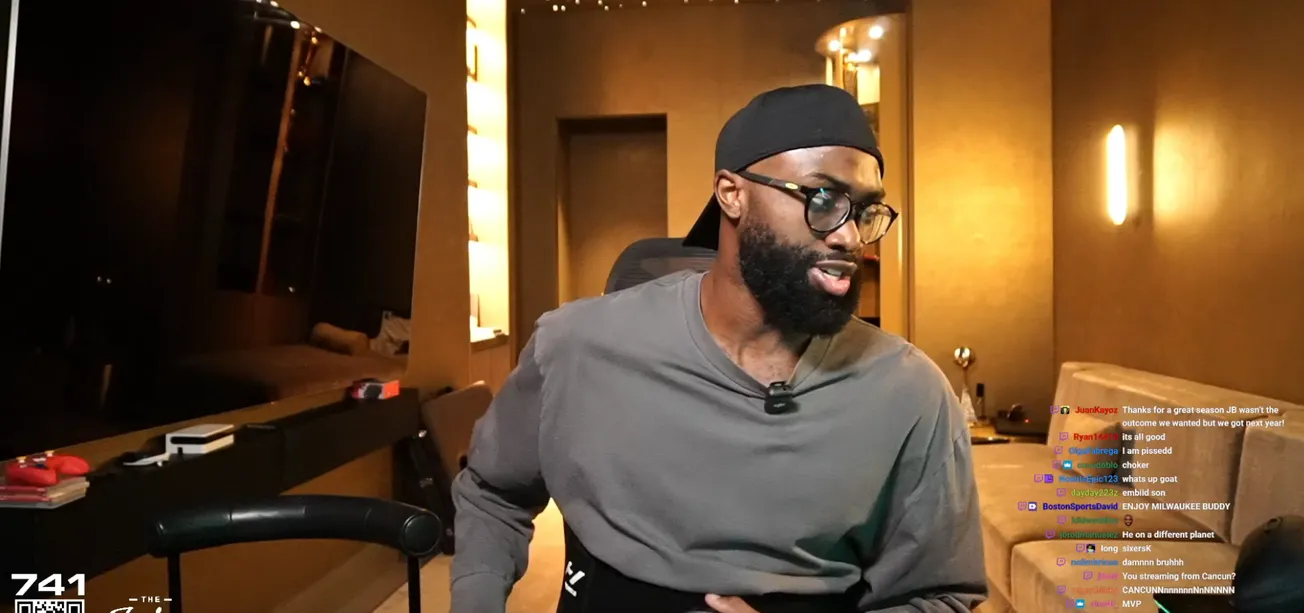
Less than 24 hours after his Celtics blew a 3-1 series lead and were eliminated from the playoffs, Jaylen Brown appears in the frame sporting what appears to be a menstrual heating pad and begins a webcast that is rather unbecoming, perhaps even more debasing than losing a Game 7 his your home floor. He is in a makeshift studio, probably located in the fifth spare bedroom of a lavish domicile, and he is talking to people even though he is alone in this room.
The subject (a professional athlete) and setting (a streaming setup) are both familiar, but the synthesis of these two things is disorienting, despite the fact that Brown has been engaging in this dorky form of social media all season long. If an NBA superstar broadcasting himself on the same medium as TimTheTatMan or, more accurately since this is an "IRL" stream, Amouranth, of "Pools, Hot Tubs and Beaches" subcategory fame, is not embarrassing enough, Brown's impending meltdown will soon be cause for regret.
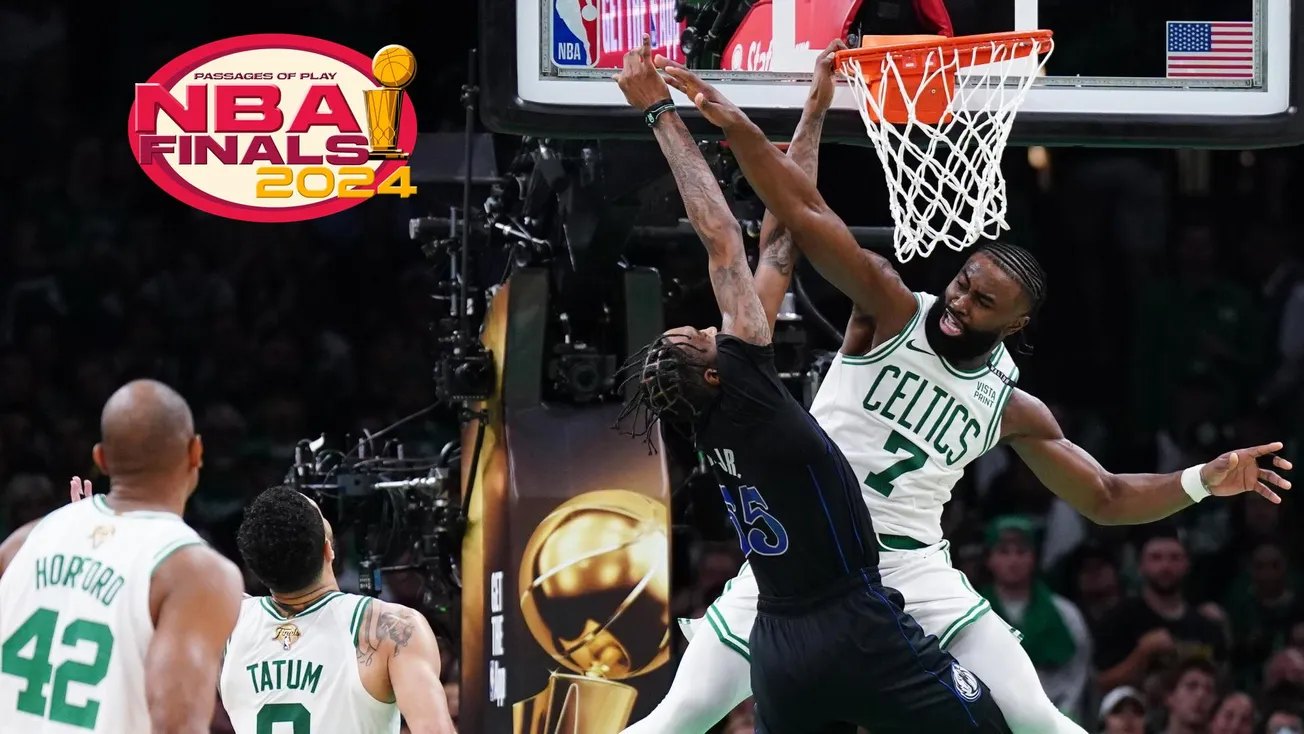
Talking to his "chat," the size of which I am unable to verify but the composition of which is almost assuredly 100 percent teenage boys, Brown spends the better part of an hour reviewing YouTube highlights from Game 7. He offers incisive insights such as "Joel Embiid is a massive human being" (watch out Kenny, Charles and Shaq), decries the referees and claims conspiracy, complains about Embiid's flopping while, in the next breath, justifying his own grifting on the other end. He celebrates a fourth quarter block on Embiid. "Gimme that!," Brown exclaims. "Come on chat!" This conjures the image of Brown, hyped after a big play at the TD Garden, shouting to the crowd, only if everyone in attendance is prepubescent.
It's inconceivable that the sports media landscape has deteriorated so much that a player would earnestly utilize this method of communication as a substitute. Journalists once feared The Players' Tribune's arrival would curtail access to unbiased storytellers. Compared to that, an athlete crying about their Game 7 follies while comments like ""this is so cringe" and "I FROM NY AND AM A DIE HARD CELTICS FAN FUCK THEM KNICKS" scroll across the screen is the apocalypse manifest. Even Draymond Green, who was filming video podcasts after playoff games during the Warriors' 2022 title run, was engaging in a medium of yesteryear, in a form of communication that is being supplanted if not dismissed altogether.
Players used to express themselves to the fans via the media. After the dawn and development of the digital age, players could address fans directly, allowing their personalities to be transmitted without any filtration or curation. But Brown isn't just addressing his fans, he is communicating, in real-time, with lonely, bored high schoolers, and not surprisingly the "content" he produced on this post-Game 7 stream is rather juvenile, befitting of the platform. "Flopping has ruined our league," Brown says. "Joel Embiid...flops. He knows it, too. I can clip it up, you can post it on these paid accounts, bots, whatever." Were he a degenerate who tuned into IRL Twitch streams, now would have been the perfect time for Embiid to drop a patronizing 34 gifted subs, one for each of his Game 7 points.
Having accessible stars was once considered the NBA's preeminent strength as a marketable product. What Brown is doing here completely undermines that idea, because accessibility is not what NBA stars offer more of than the MVPs and All-Stars of other sports, it's swagger. And nothing can diminish the assertion that NBA players are "cool" faster than streaming on Twitch and complaining about offensive fouls to an audience of kids who are using their parent's credit card to send $5 a month to a multimillionaire in order to access an exclusive set of emotes. (Ironically, LeBron James, possibly the last athlete left with a firm grasp on the monoculture, could absolutely get away with streaming Madden on Twitch, if only because he is well into his goofy dad era, his allure now less swagger and more a grayed suave).
If Kobe Bryant lost a Game 7, fans would have no trouble picturing the tireless, borderline psychotic offseason workouts he was about to undertake as punishment and preparation, the mythologizing of his persona having been so meticulously and glamorously formulated. Allen Iverson was the pulsating cultural force that propelled the NBA as an avant-garde spectatorial entity; can you imagine him addressing "chat"? (No comment on whether Iverson would have preceded Ja Morant in getting suspended for some uncouth behavior on IG Live.)
As it turns out, receding from public view when the spotlight pulls away is just as integral in establishing oneself as a relevant and reverberant cultural figure as what you do under the bright lights. To that end, we realize Brown's behavior portends to something much larger than a sports media issue, with this parasocial paradigm having already evolved into a grotesque sociological malignancy. Jaylen Brown, like his streaming peers Adin Ross and Clavicular (it pains me to write these names, committing to print that I had at least have some abstract awareness of them), is so socially accessible and available that he becomes anti-social - alone - when he is not online. There is simply no other reason for Brown, a Finals MVP with a $300 million contract, to ever conceive of the idea to broadcast his life so flagrantly to a gauche audience of goobers and gooners.
The IRL stream is a destructive phenomena, a paradoxical display of modern social life with practitioners who behave disruptively and egotistically. But it makes sense why these Cenats and Speeds persist; there's a lot of money to be made in capturing the attention of a generation that prefers watching someone else living to having a life themselves. Their celebrity is one born of the allusion normality, a valuable commodity during a time when human behavior is becoming increasingly abnormal. It's an even cheaper fame than that of the Kardashians or a Real World cast; the barrier to enter the current zeitgeist is an iPhone, an internet connection and a willingness to do memeable things, which tend to escalate in their depravity as viewer counts go up.
It seems obvious that being an NBA player is a far more credible and desirable designation than being a popular Twitch streamer. But why, then, is Jaylen Brown interested in being both? Especially when his streams only serve to denigrate his reputation as a player, laying bare his insecurities and lack of awareness. I'm sure many players deflect blame on refs and luck and teammates when they get sent home for the summer, but at least they have the good sense not to broadcast their grieving session like some kind of humiliation ritual.
"It was my favorite year of my basketball career," Brown said near the end of the stream. "Streaming with you guys, chat, was awesome. Being able to talk to y'all was like therapy."
As it were, Jaylen Brown, even as one of the league's most visible and discussed players, feels more seen on stream than on the court.